India may be dreaming of becoming a global aviation hub, but in reality, its air travelers are living through their worst nightmare.
Women, children, elderly passengers, patients—lakhs of people—have been standing in serpentine queues outside major airports, sleeping on floors, or spending entire nights inside terminals waiting for flights that never took off.
Flights delayed by 18–20 hours, thousands canceled without warning.
Weddings missed. Exams missed. Jobs lost. Vacation plans destroyed.
Airports now look less like airports and more like overcrowded bus stations.
Chaos at Indian Airports: What Exactly Happened?
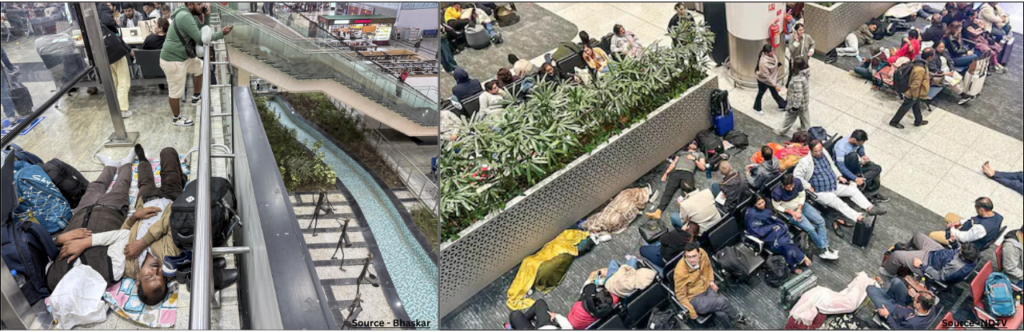
- Passengers lying on the floor
- Heated arguments with airline staff
- Sit-ins and protests
- Social media flooded with frustration
In just the first few days of December alone, over 2,000 IndiGo flights were canceled.
(Source: DGCA data, December 2024)
Other airlines quickly capitalized—prices shot up 10–20 times.
A Delhi-to-Guwahati ticket soon cost more than a Delhi-to-London fare.
The government issued warnings, invoked price caps, and held emergency meetings.
But the big question remains:
How did the aviation system collapse so suddenly?
Is IndiGo Solely Responsible? Or Is the Government Also at Fault?
On the surface, it looks like an IndiGo operational failure.
But India’s aviation ecosystem today is such that one airline controls nearly 60–65% of the domestic market.
When one company becomes that dominant, it gains the power to bend the system—including the government.
This crisis is not just about IndiGo.
It’s a story of monopolies, weak regulation, and a shrinking market where citizens slowly lose their right to choose.
Where It All Started: New Rules, Old Systems
The Trigger — Revised FDTL Rules
In January 2024, DGCA revised the Flight Duty Time Limitations (FDTL) to improve safety and reduce pilot fatigue
Key changes included:
- Minimum 48 hours of weekly rest for pilots
- Redefining night-time from 12 AM–5 AM to 12 AM–6 AM
- Night landings reduced from 6 to 2 per week
- No more than two consecutive night duties
- Mandatory quarterly fatigue reporting
(Source: DGCA Circular, Jan 2024)
These rules were globally aligned and introduced for safety.
But Indian airlines—especially IndiGo—were not prepared.
IndiGo’s Official Explanation: “We Were Hit the Hardest”
IndiGo argues that:
- It operates 2300+ daily flights, the largest network in India
- Their aircraft perform multiple legs per day (Delhi → Guwahati → Kolkata → Delhi)
- A delay in one flight triggers a chain reaction
- They run the largest number of night-time flights
- Fog, technical issues, crew shortages, and rule changes collided at once
Their performance plunged dramatically:
From 80% on-time to 67%, then 35%, then 8%.
IndiGo claimed they needed a full system reboot, requiring 5–10 days.
But Pilots Tell a Different Story — One That’s More Believable
Pilot unions and insiders say:
IndiGo intentionally avoided hiring new pilots
Despite knowing the FDTL rules were coming, the airline:
- Froze hiring
- Overworked existing crew
- Ignored internal fatigue warnings
- Failed to build backup rosters
When the travel season (festivals + weddings + winter) peaked, the cracks exploded.
Did IndiGo allow the crisis to escalate to pressure the government?
Pilot groups allege:
“IndiGo let the system break down so the government would be forced to roll back or delay the new rules.”
What followed?
The Government’s Response
- The new FDTL rules were postponed to February
- A formal inquiry was announced
- But effectively… the government gave in
When one company controls most of the market, even the state bends.
How Did IndiGo Become So Powerful? The Rise of a Monopoly
This didn’t happen overnight.
India’s aviation market has been shrinking for years—not in travelers, but in competitors.
IndiGo’s Growth Timeline (Simplified)
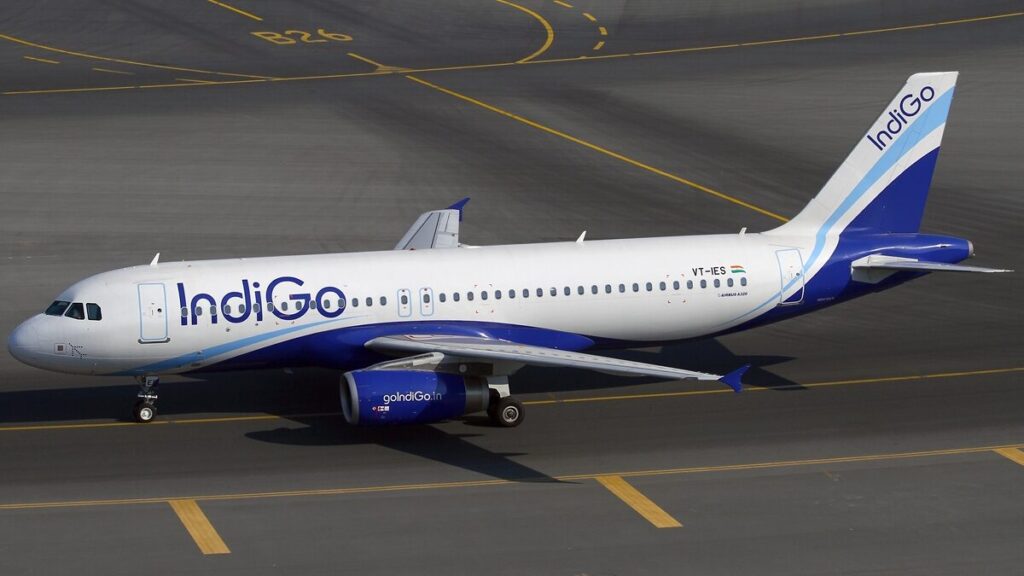
- 2005: Founded by Rahul Bhatia & Rakesh Gangwal
- Business model: On-time, no-nonsense, low-cost
- Placed a historic order for 100 Airbus A320s even before starting operations
- Rapid expansion into tier-2 and tier-3 cities
- Competitors began collapsing:
- Kingfisher shut down
- Air Sahara absorbed
- Jet Airways collapsed
- Go First grounded
- Tata Group absorbed AirAsia & Vistara
Today the market is a duopoly:
- IndiGo (60–65% share)
- Air India (Tata-owned)
(Source: DGCA Market Share Report 2024)
In a duopoly, passengers don’t decide the prices—companies do.
India’s Monopoly Problem: A Pattern Across Sectors
Aviation is not alone.
India is becoming a textbook example of monopoly-driven markets.
1. Telecom
Before Jio: Airtel, Idea, Vodafone, BSNL, Tata Docomo, Uninor, Loop, Reliance, etc.
After Jio’s aggressive entry:
- Most collapsed
- Only Airtel + Jio dominate
- Prices increased
- Consumers have no choice
2. Cement
Adani acquired ACC & Ambuja.
Now 4–5 companies control 50%+ of India’s cement market.
Prices rising steadily.
3. Ports & Airports
Adani Group now operates several of India’s major ports and airports.
Delhi and Mumbai airports have proposed increases of 10–20x in User Development Fees.
(Source: AERA Consultation Paper)
These charges get added to your ticket.
Your choices shrink → their power grows → you pay more.
Who Suffers the Most? The Common Citizen
When choices disappear:
- Companies dictate prices
- Service quality drops
- Government retreats
- Consumers get trapped
What happened at airports this week is a glimpse of the future—
A future where monopolies decide how much you pay, how you travel, how you live.
Conclusion: This Is Not Just IndiGo’s Crisis — It’s India’s Economic Reality
This meltdown teaches us two crucial lessons:
1. Monopolies are dangerous—no matter the sector.
They weaken competition and destroy consumer choice.
2. Weak regulation empowers corporations, not citizens.
When a single airline can bring an entire country to a standstill,
it’s not just an aviation failure—
it is a policy failure.
Today’s airport chaos could become tomorrow’s nationwide economic disruption.
Sources (public domain):
- DGCA Circular on Flight Duty Time Limitations (Jan 2024)
- DGCA Domestic Aviation Market Share Report (2024)
- Statements from Ministry of Civil Aviation
- AERA Consultation Paper on Airport User Development Fees
- Reports from The Hindu, Economic Times, Indian Express (Dec 2024)